


Introduction to White Light Reflectance Spectroscopy
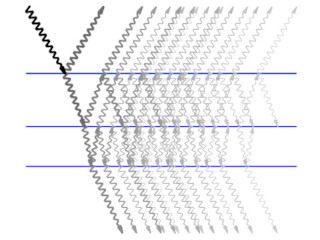
White Light Reflectance Spectroscopy (WLRS) is a kind of method by observing broadband light(VIS or VIS/NIR) from reflection. The light reflected from the surface of the substrate with sample film, and the reflected spectrum will have at least an interference fringe in the visible spectrum. The difference from the typical Reflectometric Interference Spectroscopy (RIfS) is that WLRS uses Si Substrate as reflection media, instead of transparent substrate.
Due to the above reasons, WLRS is more suitable for today's mainstream Microelectronic Processes and related applications, which is used to measure the thickness of surface coatings or films. For example, film thickness measurement applications for microfluidic biochips, semiconductor and optoelectronic industries. Moreover, WLRS method can be applied in real-time monitoring from multi-layer and multi-samples without moving optical components. Besides, the cost and complexity of the measurement setup won’t be increased.
Read more: Introduction to White Light Reflectance Spectroscopy
How A Calorimeter Improves The Safety of Secondary Lithium Cells?
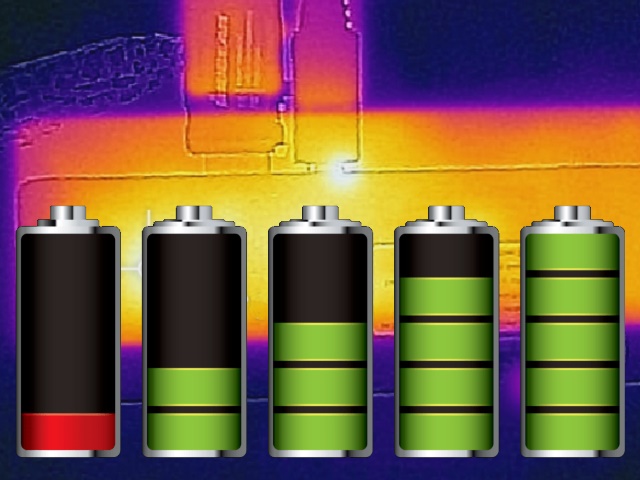
Secondary batteries are those ones which can be recharged and reused. In recent years, portable 3C products, such as mobile phones, wireless phones, laptops, electric vehicles, electric motorcycles, electric bicycles. As these transportation tools and energy storage devices becomes popular, the rechargeable batteries have become an indispensable parts to store energy. The modern secondary batteries, according to its technical basis, can be categorizeed in four types:
Ni-Cd batteries, Ni-MH batteries, Li-ion batteries and Li-polymer batteries. Among these batteries, lithium battery is the most popular secondary battery, because of its high energy density, long life, light weight, etc..
Read more: How A Calorimeter Improves The Safety of Secondary Lithium Cells?
Measure The Thermal Properties of Geopolymer
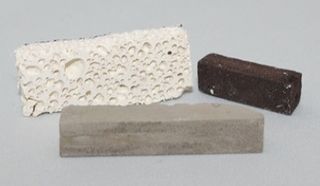
Geopolymer is a kind of new material (based on the invention of Viktor Glukovsky in 1950s), which combines the characteristics of organic matter, ceramics, cement, and it is an excellent alkali-activated cementitious material. Alkali-activated cementitious material has much better characteristics than the conventional Portland cement, it the behaviors of high compressive strength, corrosion resistance, permeation resistance, durability, etc. In addition, geopolymer, can be produced from the industrial waste (such as high temperature slag, fly ash) to produce, nowadays, it became very popular in the related research, because of its environment friendly nature.
The common applications of geopolymer are many today, such as:
- Fire retardant binders
- Thermal shock refractories
- VLO Aircraft runways
- Protective coatings