


The Future of Flexible Electronics: Efficient Integration of Mica Substrates and BiFeO3 Ferroelectric Materials
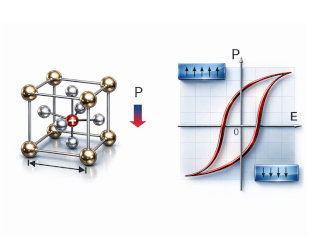
With the rapid advancement of wearable devices, foldable displays, and smart medical sensors, "flexibility" in electronic components has become a core competitive frontier in material science. However, maintaining high-performance functionality while ensuring extreme physical flexibility presents a significant technical hurdle. Specifically, in the field of non-volatile memory, integrating high-quality Ferroelectric Material onto flexible substrates remains a peak that scientists are eager to scale.
The Importance of Particle Characteristics in Metal 3D Printing
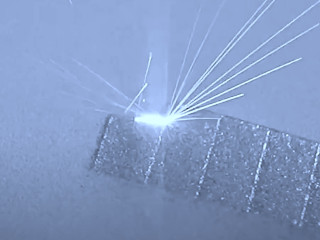
In metal 3D printing, Particle Size Analysis is a critical step in ensuring high-quality manufacturing. By leveraging advanced Particle Size Analyzers, industries can achieve superior control over powder characteristics, leading to enhanced print precision, improved mechanical properties, and greater overall efficiency in additive manufacturing processes. As 3D printing technology continues to advance, the role of particle analysis in optimizing material performance will remain indispensable.
Read more: The Importance of Particle Characteristics in Metal 3D Printing
Evaluating Hiding Power of Pigments by A Particle Size Analyzer
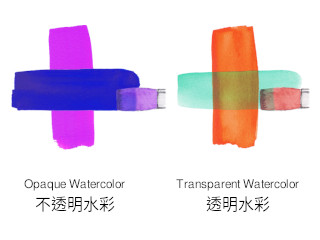
The "Hiding Power" of a pigment, also known as hiding strength or coverage, refers to the capacity of a coating or pigment to conceal the underlying surface or previous layers, effectively obscuring the color or pattern of the substrate. When we paint the wall or paintings layer by layer, the top layer of pigment can effectively cover the original color in the lower layer. Take watercolor painting as an example, when we applying opaque watercolor onto an existed color block, it can easily cover the underlying color (opaque watercolor has stronger hiding power), while the transparent watercolor cannot completely cover the lower layer, but it results the artistic effect of color layering or gradient (weak covering power).
The hiding power of pigments are of great significance to the manufacturing industries of paints, art paints, printing, etc., because it determines the ability of covering the surfaces with blemishes or dirt (opaque requirements), or to achieve gradual ability to layer artistic effects (semi-transparent requirements).
Read more: Evaluating Hiding Power of Pigments by A Particle Size Analyzer
Monitor The Degradation of In-Service Lubricants by FT-IR

Lubricants is mainly used for lubrication inside the machine, as well as the functions of cooling and anti-rust. For example, the lubricants in an engine is an indispensable substance for its normal operation. When the lubricant gets aged and deteriorated, it will cause metal wear on the high-speed running parts inside the engine, and even cause damage to the cylinder or piston. Leading to a car, motorcycle, or aircraft stalling, even more serious consequences.
Read more: Monitor The Degradation of In-Service Lubricants by FT-IR